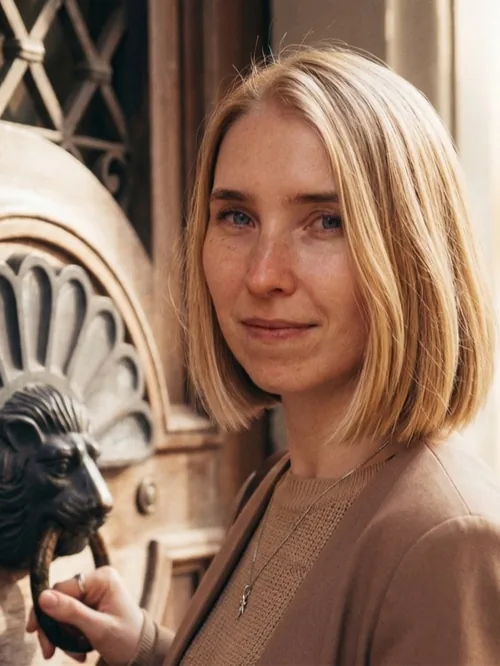
Systems Thinker · Project Lead · IP Governance
At the intersection of governance, systems design, and project delivery — in organisations where new institutions, products, and infrastructure are being built from scratch.
Taught me to model systems and find the variable that actually matters. A physicist doesn't describe what they see — they ask what governs it. That habit never left.
Taught me structure, risk architecture, and how governance fails in practice. Rules are not bureaucracy — they are the operating system of organisations. When they're wrong, everything built on top of them is fragile.
Execution under real pressure — across construction, manufacturing, healthcare, logistics, retail. Not managing one process, but holding the full legal and operational architecture of a multi-entity holding simultaneously.
Showed me how innovation actually fails inside organisations — not from lack of ideas, but from lack of structure. Most IP problems are governance problems. And most governance problems are systems problems.
This is not a scattered career. It is an evolution — each layer revealing the limits of the previous one and pointing toward what actually needed to be built next. Project and programme management is the natural next form of all of it.
A software development company — part of a larger industrial holding — had no IP governance whatsoever. No chain-of-title. No asset registry. No policies. No awareness among developers that what they created had legal and commercial value. The brief was: draft IP policies.
What I found was that policies would be useless without the underlying system. The real problem wasn't legal — it was architectural and cultural. Developers didn't understand why it mattered. Management saw IP as a legal formality, not a strategic asset. I reframed the task entirely.
Instead of producing documents, I designed a governance infrastructure: a chain-of-title framework built around how developers actually work, an asset registry structured for real operational use, an internal knowledge base that people would actually open, and a change management programme that addressed resistance directly — explaining the "why" in language that resonated with a technical team.
* Confidential engagement. Client details withheld by agreement.
A holding company needed to secure a high-value government infrastructure contract. The documentation was complex, the window was a single weekend, and the internal team had concluded it was not achievable in the time available.
I mobilised the documentation process, coordinated across multiple departments, and personally represented the company at regional and federal procurement offices to execute the agreement within the deadline.
* Confidential engagement. Identifiers withheld.
As the sole legal function for a diversified holding of eight operating entities — construction, manufacturing, healthcare, logistics, retail — I managed the full spectrum of legal, compliance, procurement, and regulatory operations simultaneously. Not sequentially. At the same time.
The practical challenge was not legal knowledge — it was architecture. How do you build a system that handles eight entities with different regulatory profiles, different operational rhythms, and different risk structures — without constant firefighting? The answer was to design internal workflows that reduced dependency on reactive legal support and gave the business faster, more independent operational decision-making capability.
This is not about admiration. Admiration is not a strategy.
The reason Saudi Arabia is the right environment for the work I do is structural fit. Vision 2030 is not a rebranding exercise — it is an institutional construction project at national scale. New sectors are being built from scratch. New governance frameworks are being designed. New organisations — in tech, creative industries, tourism, cultural infrastructure — are being stood up in environments where the internal architecture doesn't yet exist.
That is precisely where I work best. Not in mature organisations with established systems, but in environments where the system itself needs to be designed — where the real problem is always one layer deeper than the brief suggests.
I also bring something that is genuinely uncommon: a non-Gulf perspective that is neither tourist nor transactional expatriate. I have studied the Kingdom's transformation seriously — its economic architecture, its institutional logic, its cultural depth. I am learning Arabic not as a credential but as a long-term commitment to the place itself.
If something here resonated — a role, a project, or simply a conversation —
reach out directly. I'm most reachable on LinkedIn.
I'll be in Riyadh in April 2026 for LEAP.